


Retro Bowl College
4.93.39K Reviews
App Specs
- Version
- 1.1.2
- Updated On
- License
- Free
- Downloads
- 1,000,000+
- Developer
- New Star Games Ltd
- Categories
- Sports
- Platform
- Android, iOS
Screenshots

 Analysis by AppCompare
I’m most drawn to the way Retro Bowl College makes the coach’s role feel like more than a menu between matches. The appeal is in moving between on-field decisions and the broader work of guiding a college team: a choice about who to rely on can matter beyond one play. That blend gives this sports game a different rhythm from titles focused mainly on controlling every moment of a match. It asks me to think like a coach, then gives me a chance to see how those choices hold up when the game is underway.
Why the coaching layer changes the feel
The central capability is the mix of football action and team management. I’m not only trying to move the ball; I’m also weighing player strengths, morale, recruitment and the pressure of keeping the college board satisfied. Those concerns make a season feel like a sequence of connected decisions rather than a collection of isolated contests. A good result can feel satisfying because it reflects both what I did during the match and the team I shaped beforehand.
That structure is especially useful for players who enjoy making a plan but don’t want a dense simulation full of complicated controls. The presentation stays approachable, while the management choices give the experience some texture. I can pay attention to the bigger picture without needing to treat every session like a long strategy exercise. For me, that balance is the game’s clearest reason to choose it over a more conventional sports game.
How I’d approach a season
I’d treat recruitment and player management as decisions to revisit, not boxes to tick once. If a match exposes a weakness, I’d take that as a prompt to reconsider how I’m building the team rather than simply repeating the same approach and hoping for a different outcome. The useful habit is to connect what happens on the field with the decisions made around it. That makes the management layer feel practical instead of decorative.
The stats can help with that process, particularly if I’m tempted to judge a player from one memorable moment. Looking at performances over time gives me a steadier basis for deciding who deserves trust. I’d also pay attention to morale, since managing it is part of the coaching role and a reminder that results aren’t the only thing shaping a season. The game is more rewarding when I make deliberate choices, then see whether the evidence supports them.
For a short play session, I’d focus on one match and a quick check of the team decisions around it. If I have more time, I’d follow the season’s wider thread, watch how the roster develops and adjust my approach after tougher games. That flexibility makes it easier to fit into ordinary downtime. It also means the game can suit someone who enjoys a continuing project without needing every session to be long.
Where it fits among sports games
Compared with sports games that aim for detailed realism or place most of their emphasis on direct control, this one leans into an old-school style and a lighter management experience. The pixel graphics and straightforward controls keep the barrier to entry low; the coaching decisions supply the longer-term interest. If I want a highly realistic presentation or a deep tactical simulator, I’d look elsewhere. If I want a compact football game where team-building matters alongside match play, this is a more fitting choice.
Worth Reading Before You Choose

EA SPORTS FC Mobile 26 Is a Bigger Football Game, but It Takes Time

Flipboard Shows What News Apps Must Do Beyond the Feed

Switching to Android Auto Means Rethinking Your Driving Routine

Google Calendar Makes a Crowded Week Easier to Manage

Ludo King Makes the Most of the Minutes Between Plans

Baby Panda World Brings Quick Play to Modern Phones, but Its Game Library Feels Busy
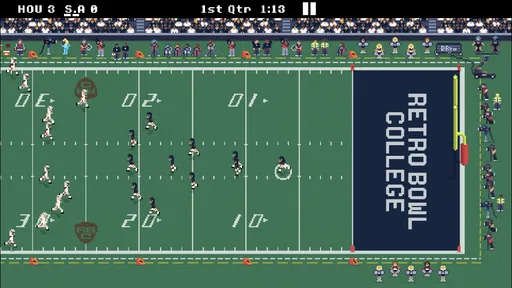
That distinction also helps set expectations around its retro look. The blocky sprites and simple stadium details are part of the design, not an attempt at modern visual realism. I find that simplicity makes it easy to focus on what I’m deciding, though it won’t impress someone whose main reason for playing is lifelike animation or elaborate presentation. The chiptune soundtrack reinforces the throwback mood, but its catchy repetition may be less welcome during long sessions than during a quick match.
A good fit for everyday play
A realistic use case is a few minutes of downtime when I want something more engaging than a puzzle but don’t have time to settle into a lengthy sports simulation. I can play a match, make a coaching decision, and leave with a reason to return to the season later. It also works for someone who likes sports management but wants the match itself to remain accessible. The key is enjoying the connection between preparation and results, rather than expecting management menus to be the whole game.
There are trade-offs. The AI can make opponents feel challenging as the season progresses, so a loss may call for patience and a change in approach rather than an immediate win. The same challenge that makes a victory rewarding can frustrate someone who wants effortless, predictable matches. And while team customization adds personal attachment, it doesn’t change the fundamental appeal: the game is still built around retro football and coaching decisions, not a broad range of sports or a realistic college-football presentation.
Who will get the most from it
I’d recommend it to fans of old-school sports games, players who enjoy managing a roster, and anyone who likes seeing a season take shape through small decisions. Newcomers can get into the controls without needing to master a complicated interface, while more experienced players can find interest in stats, morale and recruitment. The best approach is to use those details to guide decisions, not to assume that tracking every number will automatically produce wins.
I’d skip it if I wanted current-generation graphics, exhaustive simulation, or a game centered on controlling every aspect of football in realistic detail. It may also be a poor fit if repeated matches and gradual team development sound more like chores than a satisfying loop. The retro style is a genuine part of the experience, so it’s worth deciding whether that look and feel appeal to you before committing to a season.
The Gameplay Experience
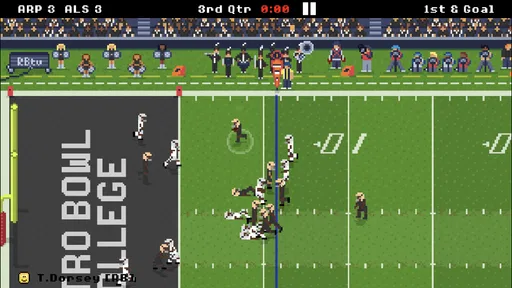
Retro Bowl College invites you to step into the shoes of a college football coach, leading your team to victory through a season of intense matches. The controls are refreshingly straightforward, making it accessible to both seasoned gamers and newbies. All you need is a keen eye for strategy and a finger on the pulse of your players’ strengths and weaknesses.
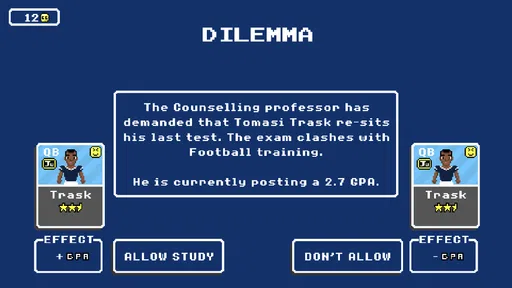
The game brilliantly combines traditional football mechanics with management elements. You’re not just calling plays on the field; you’re also tasked with recruiting players, managing your team’s morale, and dealing with the ever-watchful eyes of the college board. Each decision you make has a ripple effect, adding a layer of depth that keeps you engaged.
Visuals and Soundtrack
The graphics in Retro Bowl College are a loving homage to the 8-bit era. It’s like stepping into a time machine, where the simplicity of the visuals enhances the gameplay rather than detracts from it. The character sprites are endearingly blocky, and the stadiums are designed with just enough detail to keep things interesting.
And let’s not forget the soundtrack! The chiptune music is catchy and perfectly complements the retro aesthetic. It’s the kind of music that sticks in your head long after you’ve put the game down, in the best way possible.
Features That Stand Out
One of the standout features of Retro Bowl College is the team customization. You can tweak your team’s colors, logos, and even their name, allowing you to create a truly personalized experience. It’s these little touches that make you feel more invested in your team’s success.
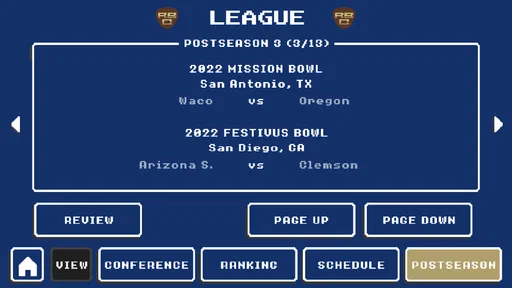
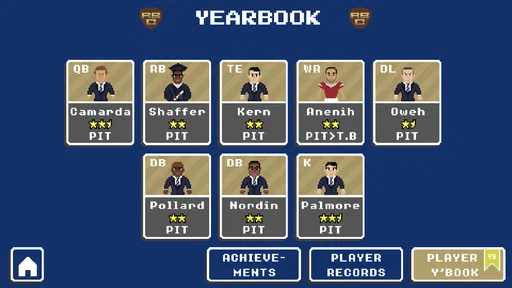
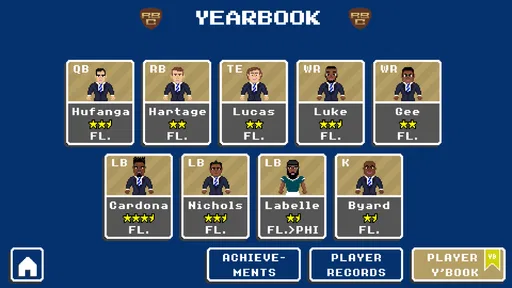
The game also includes a detailed stats system, which is a treat for number-crunching fans. You can track everything from individual player performances to overall team stats, helping you make informed decisions as you progress through the season.
Challenges and Rewards
Playing Retro Bowl College isn't always a walk in the park. The AI can be surprisingly challenging, especially as you advance to tougher opponents. But this is where the game shines—victories feel earned, and losses are lessons in disguise. The sense of accomplishment when you finally win a hard-fought match is incredibly satisfying.
The reward system is well-balanced, encouraging you to continue improving your team. As you win games, you earn in-game currency which can be used to upgrade facilities, improve team morale, or scout for new talent. This creates a rewarding loop that keeps you coming back for more.
Final Thoughts
In an age where games often prioritize flashy graphics over substance, Retro Bowl College is a breath of fresh air. Its charming retro design, combined with engaging management elements, makes it a standout choice for anyone looking to relive the glory days of classic sports games. Whether you’re a nostalgic gamer or a sports fan looking for something different, give this gem a shot. You won’t regret it.
So, grab your virtual whistle and start building your college football dynasty today! Trust me, once you start, you’ll find it hard to put down.
What to know before installing
New Star Games Ltd developed this free sports game, and it is rated for Everyone. It has a 4.3 average from around 7,700 ratings, with more than 1 million installs. The game first appeared on September 18, 2023, and version 1.0.17 is listed for devices running Android 5.0 or later. Optional in-app purchases range from $0.99 to $9.99 per item, so I’d keep that in mind if I prefer to avoid spending beyond the initial download.
Those details make it easy to try, but they don’t answer the more useful question: will its particular mix suit my habits? I’d install it for the coaching-and-match loop, not just for the retro visuals. If I enjoy checking how a roster is doing and adapting after a difficult result, there’s a reason to keep returning. If I only want a quick arcade match with no interest in team decisions, a simpler pick-up-and-play sports game may fit better.
Small choices that make a season smoother
One practical tip is to use customization early, before I become attached to a team identity by accident. Choosing colors, a name and a logo up front makes the season feel like a project I’m building, and it gives the stats I follow a team context. It won’t make the squad stronger by itself, so I’d treat customization as motivation rather than a shortcut to winning.
I’d also resist making a sweeping judgment after one loss. A close defeat and a poor run of performances are different signals, and the stats system gives me a reason to look for patterns before changing plans. That restraint is useful in a game where morale and recruitment sit alongside match results. It helps avoid turning every setback into a complete rebuild, while still leaving room to respond when the team’s weaknesses are clear.
For someone who likes numbers, the stats can become a personal notebook for the season: check who is contributing, notice where results are slipping, then decide what to prioritize next. The trade-off is that this kind of attention adds friction. Players who want the game to make every management choice obvious may find the coaching layer less relaxing than the accessible controls suggest. I enjoy the extra thought, but I wouldn’t recommend treating every statistic as a puzzle that must be solved.
When the retro approach works—and when it doesn’t
The pixel-art presentation does useful work beyond nostalgia: it keeps the screen visually simple, so my attention stays on the match and the choices around it. That clarity is a plus when I’m playing in a short break or on a small phone screen. At the same time, visual minimalism leaves less room for the kind of spectacle some sports fans expect. If atmosphere for me means realistic stadiums, detailed player likenesses and broadcast-style presentation, this is the wrong direction.
The same is true of the management side. It offers enough to make roster decisions, morale and the college board feel relevant, but it isn’t the same proposition as a dedicated, exhaustive coaching simulator. I’d choose a deeper sim if I wanted to spend most of my time studying tactics and managing a large set of detailed systems. Here, the appeal is that management supports the football rather than replacing it.
That balance makes the game a sensible middle ground for a particular kind of player: someone who wants more consequence than a quick arcade match, but less complexity than a full simulation. It is not automatically the best choice for every sports fan, and its retro look is a real preference rather than a minor cosmetic detail. Knowing that before starting makes it easier to judge the game on what it is trying to do.
Making it part of a routine
I can picture opening it during a commute break, playing a match while I have a little time, then checking the roster before putting the phone away. Later, I can return with a clearer question—whether to trust a player, recruit for a weakness or focus on morale—instead of tapping through menus without a plan. That small routine gives each visit a purpose and keeps a longer season manageable.
It is also a useful option for people who share an interest in football but not necessarily in the same kind of game. One person can enjoy the old-school look and quick controls, while another can focus on team-building and stats. The experience still depends on liking the core style, though; customization won’t turn it into a realistic sports presentation, and a coaching layer won’t appeal to someone who wants nothing but immediate action.
My recommendation is to approach it as a compact college-football season builder: play, notice what the team is telling you, make a measured adjustment, and see what happens next. That loop is where the game earns its staying power. If that sounds satisfying, its straightforward entry and retro character make it an easy one to try; if you’d rather have lifelike visuals or a purely hands-on simulation, you’ll probably be happier elsewhere.
Pros
- Engaging gameplay with retro graphics.
- Simple controls make it easy to play.
- Customizable teams and strategies.
- Offline mode available for on-the-go play.
- Regular updates with new features.
Cons
- Limited player customization options.
- In-app purchases can be pricey.
- No multiplayer mode available.
- Occasional game crashes reported.
- Soundtrack can become repetitive.
FAQs for Retro Bowl College
What is Retro Bowl College?
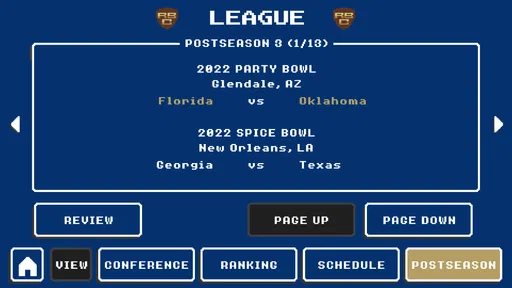
Retro Bowl College is a mobile sports simulation game that brings the nostalgic feel of classic football games to your smartphone. In this game, you can manage a college football team, strategize plays, and compete in various tournaments. It offers a blend of retro visuals with engaging gameplay mechanics.
Is Retro Bowl College free to play?
Retro Bowl College is free to download and play, but it offers in-app purchases for additional features and content. While you can enjoy the core game without spending money, purchasing extras can enhance your gaming experience by unlocking new teams, stadiums, and customization options.
What platforms is Retro Bowl College available on?
Retro Bowl College is available for both Android and iOS devices. You can download it from the Google Play Store for Android or the Apple App Store for iOS. Ensure your device meets the minimum system requirements to enjoy a smooth gaming experience.
Can I play Retro Bowl College offline?
Yes, Retro Bowl College can be played offline, allowing you to enjoy the game without needing a constant internet connection. This feature makes it convenient for playing on-the-go or in areas with limited connectivity, although certain features may require internet access.
Does Retro Bowl College have multiplayer features?
Currently, Retro Bowl College focuses on single-player gameplay, where you manage and lead your team through various seasons and challenges. As of now, there are no official multiplayer features, but updates may introduce new modes or options in the future.


